Best Time to Visit the Amalfi Coast: Month-by-Month Weather, Crowds, and Prices
Ask ten people when to visit the Amalfi Coast and you will get ten confident answers, most of them shaped by the one week they happened to spend there. The coast changes character month to month. The Positano staircase that feels like a pilgrimage in August is a solitary climb in February, and the ferry that runs four times a day in July may not exist at all by November. Weather, crowds, boat schedules and room rates move together. Knowing how they move is what separates a good trip from an exhausting one.
Here is a working calendar of the coast, from the first mild days of spring to the wet, quiet weeks of winter, with the trade-offs spelled out.
The Short Answer: Late May, June, and September
If you want a single recommendation, take the second half of May, June, or September. In those weeks the sea is warm enough for a proper swim, the ferries run on a full or near-full timetable, the lemon terraces are either in blossom or heavy with fruit, and hoteliers have not yet decided that a room with a slice of sea view is worth a small fortune.
July and October come close. July is hotter and busier but reliably sunny; October trades a modest risk of rain for warm water and half-empty villages. Everything below is an argument for or against a particular month.
Spring: March, April, and May
March is the coast waking up. Almond blossom on the terraces, cool evenings, daytime temperatures often hovering around 15°C, and a real chance of rain. Many hotels and restaurants are still shuttered, and boat services are patchy at best. In exchange you get empty trails, and the Path of the Gods without a queue of hiking poles behind you.
April turns a corner. Easter is the switch: Easter week itself brings a sharp spike in visitors and prices, then things settle again. Days reach the high teens, the sea is still bracing, and ferries generally restart around this time, though with reduced crossings.
May is the sweet spot of spring. Expect warm afternoons, wildflowers on the terraces, and a full ferry schedule from mid-month in most years. Room rates climb steadily through the month but stay well below July levels. Book May by February or March if you have a specific hotel in mind.
Summer: June, July, and August
June is the connoisseur's month. Long daylight hours, sea temperatures that finally cooperate, everything open, and beaches that still have space at ten in the morning. Rates are high but not yet at their peak, and the SITA buses along the coastal road are merely crowded rather than impassable.
July brings heat and company. Afternoon temperatures commonly reach 29–30°C, humidity rises, and the beach clubs of Positano and Amalfi fill early. Traffic on the SS163 slows to a crawl at the worst hours, which is a good reason to leave the car at the hotel and use boats. Reserve accommodation several months ahead.
August is the peak, and peak means peak. Around Ferragosto on 15 August, Italy takes its holiday at the same time as everyone else, prices hit their annual high, and beaches are claimed by 9am. If August is your only option, choose Ravello or Agerola for cooler air and elevation, book sunbeds in advance, confirm that your room has air conditioning, and plan sightseeing for early morning and late afternoon.
Autumn: September, October, and November
September may be the best month of all. The sea holds the summer's heat and is at its warmest, the light softens, and after the first week the crowds thin noticeably while everything stays open. Rates begin to soften in the second half of the month.
October is still generous. Swimming is pleasant in the first half, the grape harvest is underway, and chestnuts appear in the kitchens of Scala and Ravello. Rain becomes more likely, some hotels close in the final week, and ferry timetables shrink. It is a fine month for walking and eating, less reliable for boat-based plans.
November belongs to the locals. Many hotels and restaurants shut from November until March, storms roll through, and most ferry routes are suspended. The compensation is real: the lowest prices of the year, empty villages, and a coast that feels lived-in rather than staged.
Winter: December, January, and February
Winter here is mild and wet rather than cold, with daytime temperatures usually in the low teens. December has genuine charm: Christmas lights along the seafront in Amalfi, the presepi of Ravello, and a cheerful New Year. January and February are the quietest months, when your choice of open hotels narrows sharply and you should confirm opening dates before booking anything non-refundable. On dry days the hiking is superb; on wet ones the coast is best enjoyed from a window with a glass of something local.
What the Ferries Actually Do
Boat schedules are the hidden variable in every Amalfi Coast itinerary. Routes linking Sorrento, Positano, Amalfi and Salerno, plus crossings to Capri, generally operate from around Easter to the end of October. Outside that window, services shrink or stop altogether.
- April and late October: skeleton timetables, a handful of crossings, weather-dependent.
- May and September: close to full schedules, plenty of choice, manageable queues.
- June to early September: maximum frequency, evening runs, and long lines at the ticket office.
- November to March: assume no ferry and check the operator's website before planning any route.
Practical tip: always build at least one day that does not depend on a boat. Crossings get cancelled when the sea turns, even in high season, and the bus that replaces them is not a glamorous experience.
Matching the Month to Your Trip
- Swimming first: September, then June, then late May.
- Hiking the Path of the Gods: April, May, October, or a dry winter day.
- Tight budget: November, February, or March, with the caveat of closures.
- Photography and quiet streets: early morning in June, or any morning in November.
- Festivals and atmosphere: June for the scent of lemon blossom, August for Ferragosto, December for Christmas lights.
Practical Notes Before You Book
For June through mid-October, reserve accommodation three to six months ahead; for August, earlier still. Shoulder months reward flexibility, so favour rates with free cancellation and check ferry and hotel opening dates before committing to anything non-refundable.
Prices swing widely between seasons, and the gap between an August room and a November one at the same property can be very large indeed. If you are travelling on a fixed budget, shifting your dates by two or three weeks often matters more than choosing a cheaper hotel.
Consider splitting your stay between two bases: somewhere with easy ferry access, such as Sorrento or Amalfi, and somewhere higher up, such as Ravello or Agerola, for cooler nights and quieter evenings. Ask about lifts and steps if mobility is a concern, since flat ground is scarce.
Finally, if you are buying travel insurance to cover weather disruption, read the policy wording carefully or ask the insurer directly what a cancelled crossing actually entitles you to. It takes ten minutes and saves arguments later.
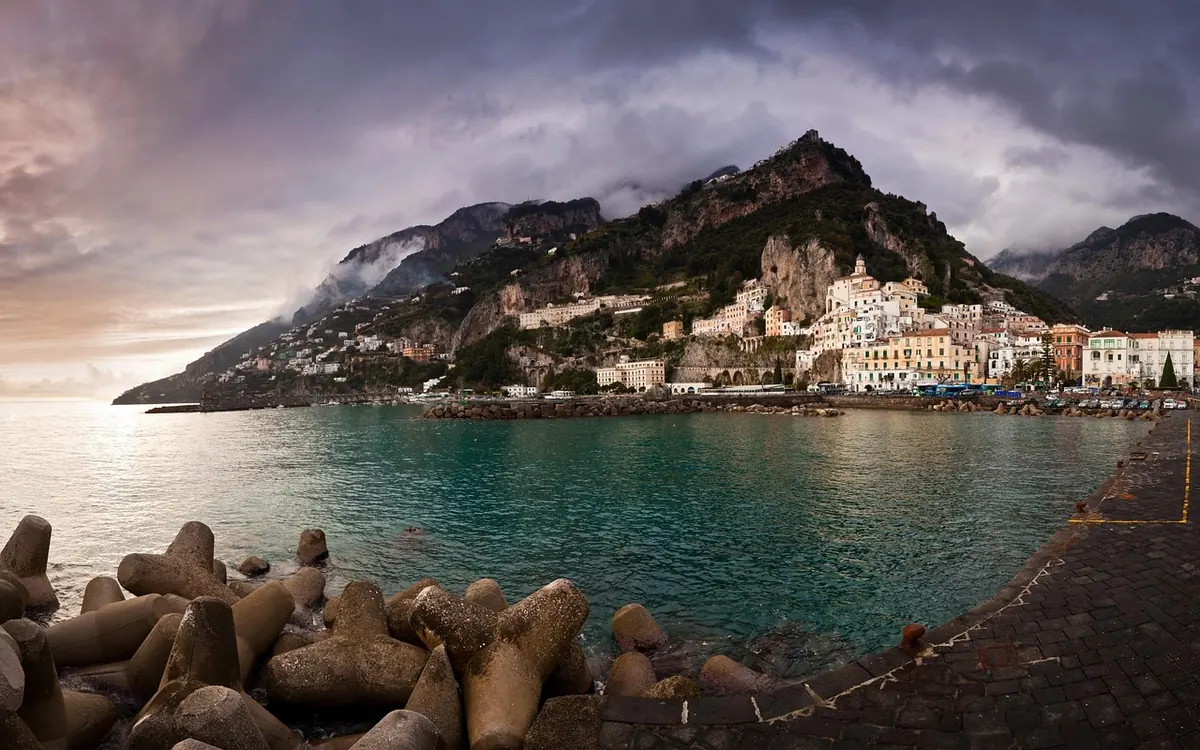
Photo: BrunoBordderr / Pixabay