What a Missed Bus Taught Me About Slow Travel in Rural Portugal
The bus was not late. That was the problem. It pulled out of the square four minutes early, while I was still inside the café paying for a coffee and a pastel de nata I had not needed, and by the time I reached the stop with my rucksack half-zipped, the tail lights were already small and red between the cork oaks. I stood there doing arithmetic. The next bus, according to the laminated sheet screwed to the wall, left at 5:15. It was 9:44.
That is how I came to spend eleven hours in a village of roughly four hundred people, and why I now plan trips in a slightly different way.
The Timetable I Trusted Too Much
I had done what felt like due diligence. The night before, I photographed the departure board at the regional terminal, cross-checked it against a PDF on the operator's website, and wrote the times in the back of my notebook. The connection looked tidy: a mid-morning bus out, an afternoon bus back, a long walk in between.
What I had not done was read the footnote. My return service carried a small note in Portuguese — dias úteis — and I had assumed it meant "every day". It does not. It means weekdays. It was Saturday. The 5:15 did not exist either, because that run is timed around a school and disappears at weekends and during holidays.
Rural timetables in Portugal are not hostile, but they are intensely local. They are built around school runs, market days and shift changes, and the gap between a line marked sábados and one marked dias úteis can be the difference between a day out and a day stuck. The sheet on the wall at the stop was newer than the one I had photographed, and it told a different story. I simply hadn't looked at it until it was too late.
Two Hours in a Village With One Café
The woman behind the counter watched me read the sheet twice, then a third time, and asked a question I understood only from the tilt of her head. I said the word for bus and pointed at the time. She laughed, wiped the counter, and said something that ended in segunda-feira. Monday.
Then she made me a sandwich I hadn't ordered and refused to take money for the second coffee.
The bus is gone, she said, in the slow, deliberate way people speak to a foreigner who is trying. Now you stay.
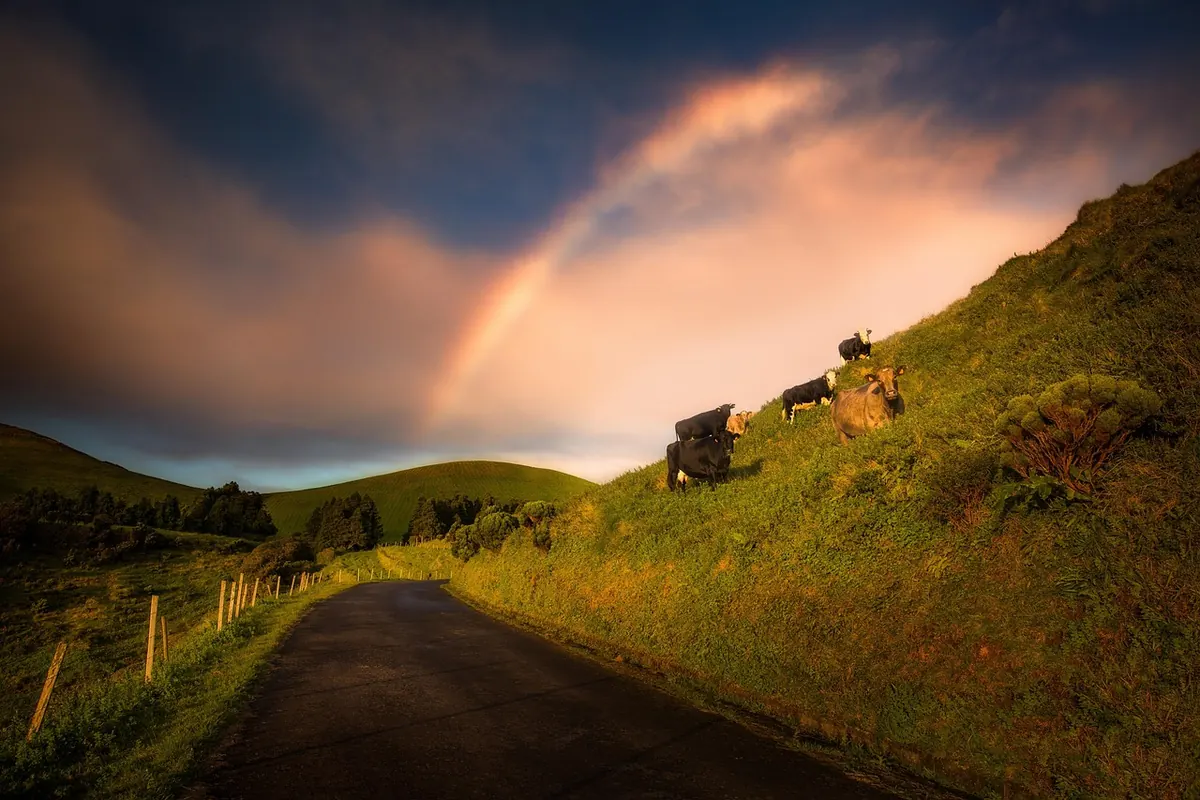
So I stayed. The village was the kind of place that photographs badly and lives well: white walls with blue skirting, terracotta roof tiles, a church with a tiled interior and a door that was locked, a fountain that had been converted into a planter, one dog asleep in the middle of the road who did not move for me or for a van. I walked the outer loop in fifteen minutes and back again in twenty.
That is the thing about a village that size. You exhaust it in an hour, and then it starts to give. A woman hung laundry and told me, through gestures, which house had the best view of the sunset. A boy on a bicycle stopped to practise three words of English. I sat on a bench and did nothing at all for a stretch of time I would normally have filled with a phone, and the nothing turned out to be the point.
An Invitation and a Fig Tree
Around midday, a man in his seventies sat down on the next bench and asked where I was from. He had spent most of the 1970s working in France, he explained, and had come back to the village when his parents got old. His Portuguese was clear and unhurried, and he was patient with mine, which at that stage consisted mostly of nouns and apologies.
He walked me to the communal bread oven, then to a fig tree behind a low wall, and stood there while I ate four figs and pretended the fifth was too much. He showed me the house he was born in. He asked why I was travelling alone and seemed satisfied with the answer, which was that I liked the quiet.
His nephew, it turned out, drove to the next town most evenings. He offered me a lift before I had thought to ask for one. At six, a small car with a cracked wing mirror appeared, and I was delivered forty kilometres down the road with a bag of figs on my lap and instructions about which café did the best bifana. I caught up with my original route one day later than planned, and it cost me nothing except the plan.
What to Do When the Bus Doesn't Come
If you find yourself at a rural stop and the bus is not coming — or came early — the response is mostly about information rather than panic.
- Read the sheet at the stop, not the one in your photos. Timetables are replaced, and the paper on the wall is usually the most current version available.
- Ask a person. A café owner, a driver, the person sweeping the pavement. In small places, someone always knows when the bus actually passes, which is not always what the sheet says.
- Find the fallback before you need it. Which is the nearest town with a taxi rank or a train station? What would a taxi cost, roughly, and is there a number you can call?
- Tell your accommodation. A message saying you'll be late is the difference between a relaxed evening and a worried host.
- Decide whether to wait or to move. Two hours is a gift; six is a problem. If the next service is tomorrow, ask about a room before the afternoon gets away from you.
The Slower Version of the Same Trip
What the missed bus gave me was slack. Not the romantic kind, where you sit in a doorway and feel enlightened, but the practical kind: unbooked hours in a place with nothing to see and nowhere to be. I ate lunch at the hour the village ate, which was not the hour I would have chosen. I learned that the café closed at three and opened again at six, and that in between the village went quiet in a way that was almost rude until you got used to it.
I had built the trip the way most of us build trips — as a chain of connections, each one depending on the last, with exactly enough time in between. That structure works beautifully right up until it doesn't. A single bus four minutes ahead of schedule collapsed the whole thing, and what replaced it turned out to be better.
Slow travel, in practice, is not about walking everywhere or refusing to fly. It is about leaving room for error, and then being willing to keep the room when nothing goes wrong. I now try to build one service of buffer into any rural leg, and I try to arrive somewhere with nothing scheduled for the first afternoon. It feels inefficient on paper. It is the part I remember.
Practical Notes for Rural Buses in Portugal
Most of this is dull, and all of it is worth doing once before you rely on a connection.
- Check who actually runs the route. Long-distance coaches and regional buses are different networks run by different companies, and matching times on paper do not always match in reality.
- Learn four words. Dias úteis (weekdays), sábados (Saturdays), domingos e feriados (Sundays and public holidays), exceto (except). These four will save you an afternoon.
- Carry cash in small notes. Many rural services are paid on board, and a driver with no change is a common and avoidable frustration.
- Signal the driver. At an unmarked stop, a bus will often pass unless you stand up and raise a hand. Be visible, and be early.
- Confirm the return trip in person. Ask at the ticket desk or in the café whether the afternoon service runs on the day you need it, and whether it is a school service that stops running in August.
- Plan around Sundays. Service on Sundays and public holidays is thin or absent on many rural routes. If you have a flight to catch, do not make Sunday the day you need the bus.
- Keep your phone charged and download an offline map. Mobile signal in the Portuguese interior is patchy, and a downloaded map plus the name of the next town is usually enough to sort yourself out.
None of this guarantees a smooth journey. Buses break, drivers change, timetables get replaced. But if you know the vocabulary, ask a human and leave a service's worth of slack in the day, a missed bus stops being a disaster and becomes what happened instead — which, in my case, was a bag of figs, a sandwich I never paid for, and an afternoon I would not trade back.